
 In my last column I wrote about the origin of OCSM and how many issues facing the industry in 1976 are still with us today. This time around I hope to offer some background on some of OCSM’s historical achievements and outline the real function of a Player Conference.
I have written about a number of these topics in the past, both here and in the International Musician, but I think it’s worth revisiting some of these points of our history periodically, especially since as much as ten percent of OCSM’s membership has turned over in the past three years.
The AFM has always been a diverse union; and it has always been organized into geographic locals, each with a fair bit of autonomy over how they bargain working conditions and set local tariff rates for all kinds of work. The Player Conferences (there are six now – the three symphonic PCs, the Recording Musicians Association, the Theatre Musicians Association, and now the Freelance Musicians Association) were born out of a need for musicians that earn their living primarily in one sector to be better organized not just in their own bargaining units, but in the union as a whole.
It might surprise you, or maybe it doesn’t surprise you, that the earliest efforts of musicians to gain more meaningful representation from their union were not met with a universally positive response from union leaders. Before ICSOM (The International Conference of Symphony and Opera Musicians) was formed in 1962, AFM locals were often described as very “top-down” organizations. Local officers were known to negotiate with no input from the members of the bargaining units. Musicians were discouraged or even forbidden to form orchestra committees, and any efforts to do so were met with hostility, the musicians being accused of “dual unionism”.
If you’re interested in a good read on the early history of symphonic musicians’ efforts in gaining control of their working lives, this is perhaps the fourth time in Una Voce that I have recommended this book: More Than Meets the Ear: How Symphony Musicians Made Labor History, by Julie Ayer. Ayer was formerly the Assistant Principal Second Violin of the Minnesota Orchestra. I probably mention this book at every OCSM Conference; I think it should be required reading for everyone in our profession. Side note: I think I lent my hard copy to another musician and never got it back; I just purchased the Kindle edition of the book and it only cost me a small number of credit card rewards points. Just buy it – it’s only $10.
One of the first things the brave founders of that first Player Conference did was to meet and compare their basic working conditions. This is something we take for granted nowadays, but in those days before mass communication this was a big deal. Just knowing what the basic wages were in two different, but similar-sized cities was new territory for these orchestral musicians. And that is perhaps the most important function of the Player Conferences – the ability to share information across the entire union (and now the entire world through the International Federation of Musicians). These first meetings of musicians from different orchestras led to a number of things we take for granted.
First, our union now has separate divisions and staff in its offices in both the US and Canada that provide services to musicians in these specific sectors. These divisions came about in part because of musician lobbying efforts. The Symphony Department was one of the first of these offices to be created, and it is now known as the Symphonic Services Division (as a side note: OCSM lobbied for such an office in Canada, and we have had at least one SSD employee based in Canada since around the time I started in this profession in 1990). Player Conference Delegates and Local Officers collect a huge amount of data from each bargaining unit to create comparative charts of wages and working conditions. Every conference has its own delegate e-mail forum, where questions are fired off pretty much weekly throughout the season: “How does your orchestra handle x situation?” or “How many of you still have a conductor veto at auditions and tenure-review hearings?”. Any musician can access the collective bargaining agreement of any other orchestra. And thanks to modern means of communication, Delegates can meet virtually during the season to give reports on their orchestra’s activities.
At this point I have to reflect on the changes in OCSM’s operations over my time in the profession. When I began, there was no Internet (that’s not true but you know what I mean). The first OCSM communication I received was a printed, 32-page (!!) newsletter sent to my orchestra’s OCSM Delegate and left on my music stand. In my early days of being involved as an OCSM Delegate (my first Conference was in 1999), we lamented the fact that a huge expenditure was undertaken to get this information to musicians, like delivery of the newsletters and wage charts. Looking at old financial statements of OCSM, the newsletter cost up to 40% of OCSM’s total expenditures – only to have some people leave it on their music stand. We’re in a situation now where we can immediately distribute information electronically, but instead of being left on a music stand, it gets blocked by a spam filter, or lost in a clogged inbox with hundreds of other emails, or trapped in an ocean of data which is host to an epic battle of algorithms vying for our attention. I’m not sure what point I’m trying to make with this paragraph, except maybe that mass communication is both easier and ironically more difficult than ever.
That leads me to this point: With all the positive changes made to our union, and with all the miraculous means of communication at our disposal, the central activity of OCSM is, and probably always will be, an annual in-person conference. And that remains the focus of most of our activity each season; planning an annual gathering where representatives from each orchestra can discuss issues, share stories, and learn from experts in our field and related fields.
Looking back at just the OCSM Conferences I have attended (this summer will be my 27th!!!) I have already remarked about some issues still being with us, but I can also attest that we have gone in some interesting directions. The advantage of being part of a union (and subject to its rules) but also being a separate organization that advocates for musicians of a particular type, is that we have been able to branch out in what we offer our members.
One of the things that I’m proudest of, and I have years of work by my predecessors to thank for this, is the positive relationship that OCSM has with the national service organization for Canadian orchestras: Orchestras Canada. This is the organization that serves the entire orchestral community of the country, from youth and community orchestras to the fully professional orchestras, and in particular offers resources for orchestral management and leadership. Since all of us are in a unionized workplace and find ourselves at the opposite sides of a table with managers, it would seem obvious that the relationship between our two organizations should be handled extremely carefully. Some might argue that we should have nothing to do with each other, that any sort of cooperation would weaken our position at the bargaining table. I would suggest that if anything, our position is strengthened by our relationship with Orchestras Canada. Building relationships based on mutual respect and trust at the national level can only help to build that trust at the local level. And just because we cooperate with “the other side” of our collective bargaining agreement partners, that doesn’t mean that either side has to compromise in the manner in which they pursue their goals.
I’m also particularly proud of how OCSM has worked to fill in gaps in our education and development as musicians. I would like to think that OCSM “teaches us all the stuff we didn’t learn in music school.” This is particularly true in the area of musicians’ health and wellness. When the first performing arts medicine practitioners began work in Canada in the 1980s, OCSM was involved in spreading the word to the orchestral community. Subjects that were hitherto taboo (performance anxiety, playing through injuries, enduring unrealistic working conditions) were brought to the forefront. We have had presentations at conferences on a wide array of musicians’ health issues: hearing health (including the latest technological developments in hearing protection), musculoskeletal health, body mapping, occupational therapy, performance anxiety – this summer we’re tackling practice habits. I remember the first Canadian screening of “Composed” – a documentary by John Beder that took a look at how musicians handle performance anxiety at auditions and on the job. The first comment from a delegate was “I wish this film had been made when I was a student!”.
We have also had presentations on subjects that, when I was a student, I never would have expected to be on the menu at a conference of orchestral musicians. One of these is media training: we have had a couple of presenters that have given us role-playing training on how to talk to reporters, how to craft and distribute your message during a crisis, like a strike or lockout, and how to build relationships within your community as a group of unionized orchestral musicians. Another area which has been particularly interesting and helpful has been presenters that deal with the topic of government. Since much of our funding comes from various governments, usually arms-length funding agencies like the Canada Council or the various provincial equivalents, it has been helpful to have people from those offices come to present to us. We have even had actual politicians like the late Senator Tommy Banks, who gave us more insight into the workings of government in a few minutes than many of us would be able to learn in a decade. We have also had presenters who don’t work for the government, but have particular insight in the workings of government, like journalist Paul Wells, who has spent his career covering Parliament (he also happens to be an avid music-lover and is very much a supporter of the community of musicians).
There is so much to describe in the work of OCSM that I’ve barely scratched the surface here. I haven’t even gotten to the group benefits (instrument insurance), or the conductor evaluation database. I am pretty sure that most of what I have just written has been written before, and I will say again that I wish all of you could attend at least one OCSM conference to see what happens. If anything, it’s fun to hang out with colleagues, most of whom have very few degrees of separation, the orchestral community being what it is.
To those of you whose seasons have just wrapped up, I wish you a refreshing break from the important work you do, to those still working, I wish you a good finish to your seasons. I am, as always, your humble servant --
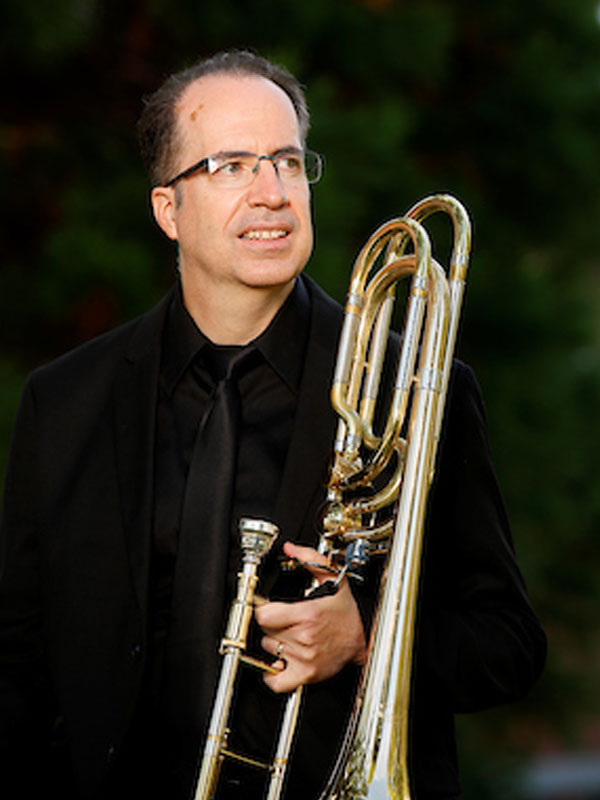
Bob Fraser, Bass Trombone, Victoria Symphony (since 1990); OCSM President (since 2013)