
- Details
- Category: News
by Matt Heller, OCSM President, Published April 2013, Una Voce Vol. 20, No. 4
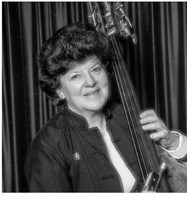
Before there was an OCSM or a Symphony Six, there was a school orchestra in Winnipeg with a problem. “The person who was playing the bass either broke his leg or his arm on the football field,” recalls Ruth Budd, who was a 16-year-old violinist at the time. “The conductor said, ‘Who would volunteer?’ and I said I would! He said, ‘Don’t be silly. You know a girl couldn’t play the bass.’”
This was in the early 1940s, and another sort of person might have believed it to be true or just accepted it as the way of the world. Not Ruth Budd: “I played a violin, and I knew that the strings were just backwards, and I thought, ‘Well, if I just think in negatives, I should be able to do this.’ So I practiced by myself. We entered the festival and won our class. The adjudicator made some comment about it being the first time he’d ever seen a girl playing the bass. Well, I really liked it!”
That was the beginning of an incredible symphonic career for Ruth, which included major contributions to all Canadian orchestras. Over the course of five decades, Ruth became the first female professional bass player in Canada, joining the Toronto Symphony in 1947. She left the TSO in 1952, a casualty of the infamous “Symphony Six” scandal. She then played in the Halifax Symphony and other orchestras before returning to the Toronto Symphony in the mid-1960s. She founded OCSM, together with like-minded colleagues, in the early 1970s. I recently spoke with Ruth by phone, from her home at a seniors’ residence in Toronto. At 89, she speaks with precision and charm, filling her stories and recollections with great warmth.
I first asked Ruth how the Symphony Six scandal came about. “The orchestra had not done much touring, but Ernest [MacMillan, the TSO’s music director] really wanted to. At that time we did not have many guest conductors, neither did we go anywhere very much, if at all.
“I was in the TSO for five years before the McCarthy era really struck and before the opportunities came along for the Symphony to go somewhere. When the invitation came to travel to Detroit for one concert, I think the conductor and the management probably thought this was a glorious opportunity to spread the wonders of the Toronto Symphony! And unless you can fulfill your contract, then you’re out.”
Ruth, of course, was one of those who could not. The six players were denied visas by the U.S. State Department, under suspicion of leftist activities. “The McCarthy era was a terrible time, when nobody had to prove anything. You had only to be suspected of left-leaning and that was enough. As I was walking past the women’s dressing room, I heard one of my colleagues say, ‘Well, she reads a lot so she must be a communist.’ And so on!”
Very little united the six musicians. One was a book lover, another had played in Ukrainian cultural centres: that was Steven Staryk, just 23 at the time, who would later return as the TSO’s concertmaster. Three of the Symphony Six, oddly enough, were bass players.
The story exploded in the papers for weeks, and some members of the TSO board quit in protest. But neither the union nor their fellow musicians did much to support the non-renewed musicians. “They didn’t want to, they were too frightened,” says Ruth. “People were so terrified of losing their jobs that they actually crossed the street in order not to talk to us. One was condemned by association. It was a pretty scary time.”
The dark chapter ends rather quickly though, in Ruth’s telling. “I was very quickly hired to play at one of the local theatres, and I loved it. Here I got a chance to hear and see the great theatre people. I was still aware of the political situation, but I didn’t feel I could do too much about it.”
While she was playing in the theatre, Ruth was also starting a family. “Concerts started at 8, so I could put my kids to bed at 7:30 and go toddling down to the theatre, because I didn’t live that far away. Well it wasn’t wonderful music, but I love theatre and that theatre, the Royal Alex, was great. I also got an awful lot of mending done in the pit.”
I asked Ruth, was mending a hobby she enjoyed? “No, I hated mending. But my kids needed socks and I didn’t have the money to buy them. So I did a lot of fixing down there in the pit.”
Ruth describes with delight how her father altered his car to accommodate her bass: "He cut this door out in the back of the car, and he put a little handle on it, so he could get the bass in the back of the car. I’m pretty sure there wasn’t another one like it; it may have been the first hatchback in Toronto, or in Canada! And he was a portrait photographer, not a metal worker."
That same spirit of resourcefulness wedded to necessity led Ruth into orchestral activism. She joined the Halifax Symphony in 1958, and found conditions there were appalling. “We needed to have enough light. We needed to have enough warmth so that the oboes wouldn’t crack. We needed to make sure that we could see the music, and that it was printed well instead of reading chicken marks, you know? Things just as simple as that. And I’m the kind of person who has a pretty good time wherever I go. I tend to say, ‘Well, how can we make it better?’ That’s just my personality. So I loved being in Halifax and we made some wonderful friends.”
In 1960, Ruth returned to Toronto to perform with the Hart House Orchestra, a celebrated chamber orchestra founded by Boyd Neel, which premiered many new works by Canadian composers. Toronto Symphony music director Walter Susskind heard her play there, and asked her to rejoin the TSO bass section in 1964.
“Right away I became a member of the Players’ Committee, alternating with another very good friend who was a piccolo player, Tony Antonacci. Either he was Secretary and I was President, or he was President and I was Secretary.”
The TSO was a member of the International Conference of Symphony and Opera Musicians (ICSOM), founded in 1962 – another international member was the Montreal Symphony. In the late 60s, Ruth began talking about forming a new, Canadian symphonic player conference: “It seemed to me really important to do that. Because we belonged to the American Federation of Musicians, ICSOM was relevant to the American law. It was not relevant to Canadian law. And we weren’t used to standing up on our own two feet and saying, ‘We can do this. We have another country, we need laws that are relevant to us.’
“And so, in about 1970, I went across the country during my summer holidays. I made contacts in advance and stopped in various cities where there were orchestras. I took the train across the country, which was a wonderful thing to do; I wasn’t in a hurry. I stopped in places like Winnipeg, Saskatoon, Edmonton, Calgary, and Vancouver, and talked to people about the possibility of starting a Canadian group called OCSM. Well, we weren’t sure what we were going to call it, but we thought OCSM would be good.”
The next fall, Ruth and her Canadian symphonic colleagues met for the first time in St. Catharines, even though they had to get permission from their orchestras to attend. “There was a little bit of fear, you know, you never know what you’re doing. And I’ll never forget the sort of fear from the union itself. They thought we were trying to break away! Our meeting was concurrent with the Canadian Conference, and I remember they were sort of pacing up and down and they wanted to know what we were talking about. But we weren’t ready to give a report. And there really wasn’t anything subversive, truly! We were trying to figure out how to make it work better for the Symphonic musicians. We wanted it to become an arm of the union, and to have a fraternal relationship with ICSOM.
“Strangely enough, it sounds as if I got really involved in a lot of the political stuff. You know, I didn’t. I didn’t get involved in the political stuff at work and I didn’t get involved in the political stuff in the union. I got involved in the political stuff that was necessary in the orchestra. So I didn’t hang around and get to know the managers of the orchestra, or even the union officials. The only time I really was involved with them was during the negotiation period.”
I asked Ruth her advice, for those going through tough negotiations today. “We all want the music, so our goal is the same: to have the best orchestra possible within the means of the city. That’s one of my great lines: You want the best orchestra, so do I. In other words, instead of building barriers, break them down.
"Ultimately that’s what you want, the best possible orchestra in that city. How do you get it? How do you attract really good musicians? Offer a really good package. Then we’ll all have what we want.”
Also, find a hobby - preferably something “that you can touch and feel and hold, or eat,” she suggests. “I used to go downstairs where I had a potter’s wheel and a kiln in the basement of my little house, and it was wonderful to work after a concert. If I hated the concert I could come back to joy by creating a pot out of clay, and if I loved the concert, well, that too. I could just work on the pot and love it.”
As positively energized as Ruth gets in recounting her memories, she’s just as enthused about her current projects. These include directing a choir of her fellow seniors at Christie Gardens. (As she firmly points out, she does not conduct.) “We’re thirty-some people and we started out singing ‘Frère Jacques’ and I would say now, we do a reasonably respectable Hallelujah Chorus.” No matter the place or the time, it seems, Ruth Budd finds a way to organize and make music.
Source interview:
Can you tell us a bit about the Symphony Six?
It happened so long ago – I guess that it’s relevant, it’s certainly part of my history.
Symphony Six happened in the early 60s?
No, it was actually the early 50s. Makes a difference.
And you had just joined the Toronto Symphony at the time?
No, I had joined 5 years earlier.
And the orchestra was touring to the States?
Well, the orchestra had not done much touring and we had had very few guest conductors. And I think Ernest [MacMillan, the TSO’s music director] really wanted to. We did not at that time have many guests, neither did we go anywhere very much. If at all – if I recall, we didn’t even service our own country, which I thought at the time was a mistake. But I was pretty excited about being in the orchestra, I was only in my early 20s so, stardust, etc.
That must have a pretty heady time.
Yeah, it was. However, I was in for 5 years before the McCarthy era really struck and before the opportunities came along for the Symphony to go somewhere. You know, the Concertgebuow Orchestra at the time had set quite a precedent. They were invited to go on tour and [Music Director ?] van Bidem said the whole orchestra goes, or nobody goes. But that was they, and they had a whole history and I guess they were pretty secure. Whereas I think we weren’t, including Sir Ernest. So when our opportunity came along to travel to Detroit for one concert, I think the conductor and the management probably thought this was a glorious opportunity to spread the wonders of the Toronto Symphony and we want to do it! And unless you can fulfill your contact, then you’re out.
Well for whatever reason, there were six of us who could not get into the States. One including Steven Staryk, one including a book lover… At that time, the McCarthy era was a terrible time when you didn’t have to prove anything, and nobody had to prove anything. I mean, what were you proving? That you had a different belief or philosophical leanings, and so that didn’t make you a good enough musican. That’s really what it came down to. And that a foreign element was dictating who can be in our orchestra! So there were some very mixed feelings.
Was Steven Staryk the concertmaster?
No, he was very young. As I was 23, and he was younger than I was.
Were all of the 6 quite young?
No, I don’t think so. It was a real mix. Although I think there were 2 or 3 bass players, I don’t know what that was about! And so anyhow, that was the situation. And people were so terrified of their jobs that they actually crossed the street in order not to talk to us. So it was condemned by association. It was a pretty scary time.
So the orchestra went on tour without you. How long did the situation last? Were you ever able to travel to the States?
Of course I was in much later years, and of course I didn’t really have any desire to. What happened was, I lost my job in the symphony, and the six of us did. There was quite a local uproar. To quote them, we weren’t fired – we just didn’t have our contracts renewed. Well, it comes down to the same thing, you don’t have a job, right?
Was there any union protection or grievance?
None whatsoever. The union totally supported management. I would say that the union did not do its job of protecting and supporting the players. They were totally in the hands of management.
And your fellow musicians couldn’t do much either.
They didn’t want to, they were too frightened.
Was this a point where you realized we needed stronger unions?
I’m not sure that was the epiphany at that point. When you’re hurting, you’re hurting very personally, but you realize that it is a reflection of the times. I didn’t know what the answer was, I knew only that the union was not supporting us. Maybe one or two people on the board supported us. But the headlines in the local paper lasted weeks. It was quite a controversy in the city, and people quit the Symphony board in support of us, and there was a movement afoot to support the Symphony Six.
I realized certainly it was the times, the McCarthy era was upon us in the States, people were being blacklisted right and left, and for your beliefs or non-beliefs – they were not correctly right in the case of the Symphony Six – it doesn’t matter. That was just the times, and I think that for me I was very quickly hired to play at one of the local theatres, and I loved it. Because I loved going to the theatre and here I got the chance to hear and see the great people coming into town. I was still aware of the political situation, but I didn’t feel I could do too much about it.
How long until you rejoined the Toronto Symphony?
I would say it was about 12 years. Different management, different conductor who heard me playing in the Hart House Orchestra with Boyd Neal. This was a wonderful chamber orchestra, and Boyd Neal was famous throughout the world. He had the Boyd Neal Chamber Orchestra in London. He was actually a medical doctor but he couldn’t stand the sight of blood. And he loved and was very good at conducting. And he even had lots of music written for his chamber group in England.
I can’t remember who the conductor was, probably Susskind, and he heard the Boyd Neal Chamber Orchestra playing, and I was the only bass. And he said, “How come you’re not in the symphony?” and I told him the story and he said, “Well, I want you back in there.”
So that was twelve years later, during which time I’d had two kids. And I actually loved my job at the theatre because I loved going to theatre and it was a cinch of a job.
Did you ever miss that work later?
When I came in, of course I left the Royal Alex. I liked what I was doing, but of course it wasn’t much of a challenge. You go in early and play the music at the beginning, at the intermission, and a chaser. Well it wasn’t very wonderful music, but the theatre was great. And so I enjoyed that while I was doing that, got an awful lot of mending done in the pit and I could put my kids to bed at 7:30, concerts started at 8. Put the kids to bed, and go toddling down to the theatre because I didn’t live that far away from it.
How rare was it to be a woman orchestral musician at the time?
Well, it might not have been so rare to be a violinist. There were quite a few violinists and viola players. But there were no double bass players. I think I might have been the first professional woman bass player in Canada. I think so. And my father, who had a little car, in order to accommodate my bass, cut out a door in the back of his car. And I think he made the first hatchback in Toronto, or in Canada!
He was wonderful, he really was very encouraging, and my mother wasn’t too sure but my father said, “Just do whatever you want to do, if you can.” And he loved music. So he cut this door out in the back of the car, and he put a little handle on it, so he could get the bass in the back of the car. Snd I’m pretty sure there wasn’t another one like it.
Do you have any pictures of the car?
No, just in my mind. And I see him cutting it out with one of those torches that cut metal…
Was he a metal worker?
No! He was a first-rate portrait photographer. You could get someone to draw a cartoon. But my father was not a metal worker, but that didn’t stop people in those days. You read about it, or you figured out something to do. And I must say I think that at least I and a couple of other people in my family, my sons for one, have this sort of creative spirit, “here’s what you can do to make it work” sort of thing. Might be unconventional, but it’s certainly fun.
Anyhow, I think that the first time I played the bass publicly was when I was 16. And what happened was, I was in the school orchestra, we used to have wonderful school orchestras in those days. And we were going to enter the festival, and we also did a program of Gilbert and Sullivan every year. There were pretty good players. And the person who was playing the bass I think either broke his leg or his arm on the football field. And the conductor said, “Who would volunteer?” and I said I would! And he said don’t be silly, you know a girl couldn’t play the bass.
I played a violin, and I knew that the strings were just backwards, and I thought well, if I just think in negatives, I should be able to do this. So I practiced by myself, and we entered the festival, and we won our class. And whoever it was made some comment about the first time he’d ever seen a girl playing the bass. Well, I really liked it!
That’s wonderful.
It really was wonderful! And then I found someone to give me lessons, and he was a wonderful old guy who used to play the bass. And he was quite old, but he told me things like using gut strings you had to cut a walnut in half and use the walnut oil on the strings, which would keep them from rattling or something. Wonderful old guy.
This was in Manitoba, by the way, that I started. I grew up in Winnipeg until I was about 16 and then I left for Vancouver. And so, I think that at 16 you’re developing an identity of some kind, and I was developing mine, and that’s what I did. And joined every orchestra I could think of, the provincial youth orchestra and whatever, in order to learn how to play. And I heard some orchestra, it might have been the Philadelphia under Stokowski, and they played the Bach Toccata and Fugue, and that just made me absolutely wild with joy! And I thought, “I have to do that. That’s what I have to do.”
- Details
- Category: News
By Matt Heller, Una Voce editor
In this issue, Michelle Zapf-Belanger explains a role that is either unknown or still taking shape in most of our orchestras: the Musician Tenure Advocate. My first instinct was to shorten the title to “Tenure Buddy”. But as I read Michelle’s piece, I soon realized this is about way more than just supplying new hires with a pal. It could be one of the most important roles we ever get to perform for our orchestras and our colleagues.
Also, President Bob Fraser dives deep into OCSM’s history and what we’re all about. TL;DR? We’re about exchanging information to make our workplaces better. We witness OCSM Delegates in the act with a question about who gets to sit on Audition Committees, in our Ask a Delegate column. I preview this summer’s OCSM Conference in Winnipeg. And we list some highlights of 2025-26 -- new hires, retirements, milestones.
Michelle and Bob’s pieces both got me thinking about what this newsletter is for. Exchanging information? Check. But I think exchanging ideas and opinions can be just as valuable, especially on the issues that are most unsettled and consequential. Auditions and tenure clearly qualify. So does immigration.
When I moved to Canada in 2007, you often heard the phrase “Landed Immigrant” for what is now known as a Permanent Resident. Becoming “Landed” was THE goal, at least as much as getting tenure, because it meant that you could have a real life in your new home. Until you Landed, everything felt at least a little more complicated and precarious — signing an apartment lease, getting a credit card, making plans past June.
Becoming Landed was not easy. It involved a Byzantine application process with many steps, tests and checks, and then you had to get the whole thing notarized. At certain points it felt like it might take forever. Yet I never really doubted the outcome. I became Landed in 2010, less than three years after moving here. I became a citizen in 2014.
Most current immigrant musicians are not nearly so fortunate. A year or so ago, Immigration Canada changed the points system, removing the benefit to musicians with verified job offers. Points are awarded based on age, language skills, other demographics — but not for being a uniquely talented orchestral musician. Those who fall short of points have little recourse but to remain as “Temporary Foreign Workers”, subject to the limitations of their work permit.
There is room for disagreement about the appropriate levels of immigration for Canada as a whole. There is reason for fury at how the US government has treated Canadian musicians trying to make their livelihood through touring. But in our sector, I think there is widespread agreement that foreign-born musicians have been a benefit to Canadian orchestras. I like to think I have contributed something to Canada, and I know my foreign-born colleagues have. It will never measure up to what Canada has given me, though — a career, a home, a family, a life. I am truly forever grateful to this country. Our newly hired expat colleagues are no different than I was. They want the same things I did, and it breaks my heart that our country would deny them that.
Allistair Elliott, our AFM Vice President from Canada, is making this case to immigration officials and members of Parliament right now. Many orchestra managements are also pushing for a return to a more welcoming policy. I hope many musicians and Locals will add their voices in support.
- Details
- Category: News
 By Michelle Zapf-Belanger, Thunder Bay Symphony Delegate
In 2021, the National Alliance for Audition Support (NAAS), a collaboration of the League of American Orchestras with The Sphinx Organization and the New World Symphony, came out with new guidelines for best practices in orchestra auditions and probationary review. These guidelines were intended to help orchestras remove barriers in hiring and retaining musicians of colour. However, implementing the recommendations in your orchestra can benefit the whole organization by helping to remove bias and add transparency to audition and review policies.
One recommendation which several Canadian orchestras have already implemented is a “Musician Advocate” on review committees. The original wording in the NAAS Guidelines reads:
In the interest of assisting in a positive outcome, the musician committee, in consultation with the candidate, should identify a musician Advocate or Ombudsman, who can guide the candidate through the tenure process and assist in communication with other musicians and management.
I read the NAAS guidelines in 2021 with some interest. For the last decade in my own orchestra, the Thunder Bay Symphony Orchestra, we have already been assigning a Musician Advocate on review committees. It was a policy established in practice, by laborious trial and error, rather than through negotiating contract language, by a team of musicians on the orchestra committee who wanted to address bias in our review procedure. I was one of those musicians, and have acted as a Musician Advocate for many review committees for years.
I feel that a Musician Advocate is necessary in any review procedure. Many musicians under review, I have found, are bewildered by the process, vulnerable to coercion by tenured musicians or the Music Director, and in danger of being unfairly or carelessly evaluated by a panel that is often able to make discriminatory decisions without any meaningful oversight. The review process in our industry has come under fire in recent years because of several well-publicized instances of alleged abuse of the process, including the denial of tenure to whistleblowers Clara Kizer and Amanda Stewart of the New York Philharmonic. Any musician under review deserves a disinterested, tenured colleague to guide them through their probationary period, and fiercely advocate for a fair and ethical process for them.
I am delighted to see orchestras such as the Regina Symphony Orchestra and the National Ballet Orchestra adopt Musician Advocates formally into their contracts, and I hope that other orchestras will follow, including my own orchestra.
However, the concept of a Musician Advocate is fairly new, and I believe it will take some time and experimentation for an industry standard to develop when it comes to integrating them into every orchestra’s review process. The NAAS Guidelines provide bold big picture ideas for ways to remove barriers for musicians, but they don’t go into detail about implementation. Rochelle Skolnick, AFM Symphonic Services Division Director, has written some excellent boilerplate contract language about the probationary process, which goes into more practical detail, and is worth reviewing for any negotiating team looking at making changes to their next collective agreement. However, probationary processes vary rather widely by orchestra, and modifications to the boilerplate language may be necessary depending on your orchestra’s current procedures, and the response you get at the other side of the table.
Here are two topics I think you should take into consideration when trying to integrate a Musician Advocate into your contract or practices. While I don’t have definitive answers to any of the questions I raise, where I have a recommendation based on my experience and observations, I have included it, in hopes of providing a jumping off point for more exploration.
Duties, Roles, and Authority
Exactly what does your Musician Advocate do? This needs to be spelled out in your contract language.
How the probationary procedure is organized—who calls and presides over the meetings, what representatives are present at what stage of the process, how feedback is collected and delivered—varies from orchestra to orchestra. Because of this, it is impossible to make universal recommendations on how to slot a Musician Advocate in. Instead, look at your own process, and, where possible, ensure roles don’t totally overlap. Imagine the chaos that could ensue if the Personnel Manager, Local Steward, and Musician’s Advocate were all to descend upon a review meeting, tasked with pretty much the exact same duties!
Certainly a Musician Advocate’s duties should include ensuring the candidate under review understands how the probationary process works, including communicating timelines for when and how they should expect to hear feedback. The Musician Advocate should be available through the season to respond promptly to queries or concerns from the candidate under review.
However, I feel strongly that a Musician Advocate should also provide some ethical oversight. Current probationary processes badly need additional impartial observers, who have the authority to intervene if they see something inappropriate happening. Even if the Personnel Manager and/or Local representative is already acting as an arbiter of the process, part of the reason to have a Musician Advocate at all is to add an extra person into the mix who doesn’t have the same interests as a Personnel Manager, Music Director, or Committee. A Musician Advocate can press for fairness from a fresh angle, and their sole interest is ensuring an ethical procedure for the musician under review.
To that end, the Musician Advocate should have enough access to properly observe all parts of the process. It is a good idea for the Musician Advocate to be present at all review meetings. Additionally, the review committee should copy them on any internal electronic communication. The Musician Advocate should have a mechanism to make objections that will be taken seriously when they observe discriminatory behaviour or maladministration.
How far should their oversight go? For example, some orchestras now provide compiled survey data to candidates as feedback. Should the Musician Advocate have the ability to request inappropriate comments be redacted before feedback goes to the candidate? Something to think about.
You may want to consider a merging of roles. In my opinion, a steward or representative of the Local can probably also fulfill the role of a Musician Advocate, without encountering a serious conflict of interest. In my orchestra, one person fulfills both of those roles, and this works well because we have a small core, and therefore a limited pool from which to draw musicians involved in the review process. It should go without saying that the Musician Advocate cannot be on the candidate’s review committee, nor involve themselves in any artistic or job-related evaluation of the candidate whatsoever. They should never make any personal opinions they have about the candidate known to the review committee.
Anti-Bias Training
Review committee members are biased, and it isn’t always easy to pinpoint or prevent their biases from influencing the process. Discrimination in a review meeting can sound like an innocuous comment to someone who is not trained to recognize it. Gendered comments can be veiled in concern for someone’s domestic situation (“They just got married—won’t they want to be taking some time off in the next few years anyway?”) or artistic concerns (“Is she really a big enough person to make a big sound?”). Racial stereotypes can even be disguised as compliments, like “Their playing is too perfect.” Review committees can allow unsubstantiated rumours about the musician, which the committee has no way of verifying and no business investigating, or vague personal beefs unrelated to conduct on the job, to colour their decision-making.
It is vital that Musician Advocates receive anti-bias training so they can learn to recognize biases or discrimination when they crop up in their candidate’s process. If feasible, any musician serving on any review committee should take anti-bias training. Ensuring this happens, or facilitating it some way, may be a role to consider assigning to the Musician Advocate. At the very least, a Musician Advocate should be committed to learning about discrimination themselves, or they won’t be very effective in their role, and there won’t be any point in having one.
Many universities have paid courses in implicit bias, anti-discrimination, and related topics, as do many Human Resources training organizations. If your orchestra is willing to pay for anti-bias training for the whole committee, or just the Musician’s Advocate, that should be added to your collective agreement. If cost is a sticking point, here are some reputable free resources:
- Understanding Unconscious Bias from the British Columbia Institute of Technology
- Unconscious Bias Education Modules from the Toronto Initiative for Diversity and Excellence
Every province has a Human Rights Commission, which has additional resources specific to your province’s legislation, using clear language intended for laypeople. Perusing their website, or giving them a call when in doubt, can also help to educate someone in developing the knowledge and mindset required to be a good Musician Advocate.
- Details
- Category: News
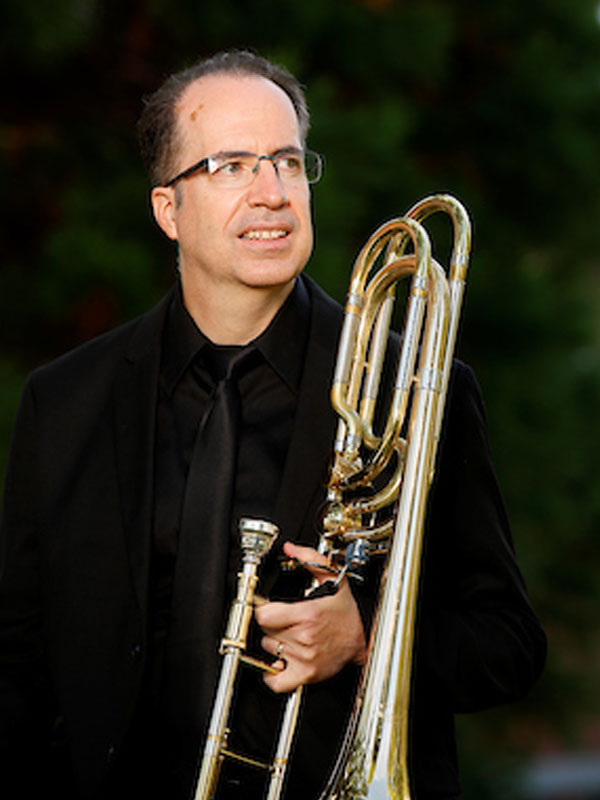 In my last column I wrote about the origin of OCSM and how many issues facing the industry in 1976 are still with us today. This time around I hope to offer some background on some of OCSM’s historical achievements and outline the real function of a Player Conference.
I have written about a number of these topics in the past, both here and in the International Musician, but I think it’s worth revisiting some of these points of our history periodically, especially since as much as ten percent of OCSM’s membership has turned over in the past three years.
The AFM has always been a diverse union; and it has always been organized into geographic locals, each with a fair bit of autonomy over how they bargain working conditions and set local tariff rates for all kinds of work. The Player Conferences (there are six now – the three symphonic PCs, the Recording Musicians Association, the Theatre Musicians Association, and now the Freelance Musicians Association) were born out of a need for musicians that earn their living primarily in one sector to be better organized not just in their own bargaining units, but in the union as a whole.
It might surprise you, or maybe it doesn’t surprise you, that the earliest efforts of musicians to gain more meaningful representation from their union were not met with a universally positive response from union leaders. Before ICSOM (The International Conference of Symphony and Opera Musicians) was formed in 1962, AFM locals were often described as very “top-down” organizations. Local officers were known to negotiate with no input from the members of the bargaining units. Musicians were discouraged or even forbidden to form orchestra committees, and any efforts to do so were met with hostility, the musicians being accused of “dual unionism”.
If you’re interested in a good read on the early history of symphonic musicians’ efforts in gaining control of their working lives, this is perhaps the fourth time in Una Voce that I have recommended this book: More Than Meets the Ear: How Symphony Musicians Made Labor History, by Julie Ayer. Ayer was formerly the Assistant Principal Second Violin of the Minnesota Orchestra. I probably mention this book at every OCSM Conference; I think it should be required reading for everyone in our profession. Side note: I think I lent my hard copy to another musician and never got it back; I just purchased the Kindle edition of the book and it only cost me a small number of credit card rewards points. Just buy it – it’s only $10.
One of the first things the brave founders of that first Player Conference did was to meet and compare their basic working conditions. This is something we take for granted nowadays, but in those days before mass communication this was a big deal. Just knowing what the basic wages were in two different, but similar-sized cities was new territory for these orchestral musicians. And that is perhaps the most important function of the Player Conferences – the ability to share information across the entire union (and now the entire world through the International Federation of Musicians). These first meetings of musicians from different orchestras led to a number of things we take for granted.
First, our union now has separate divisions and staff in its offices in both the US and Canada that provide services to musicians in these specific sectors. These divisions came about in part because of musician lobbying efforts. The Symphony Department was one of the first of these offices to be created, and it is now known as the Symphonic Services Division (as a side note: OCSM lobbied for such an office in Canada, and we have had at least one SSD employee based in Canada since around the time I started in this profession in 1990). Player Conference Delegates and Local Officers collect a huge amount of data from each bargaining unit to create comparative charts of wages and working conditions. Every conference has its own delegate e-mail forum, where questions are fired off pretty much weekly throughout the season: “How does your orchestra handle x situation?” or “How many of you still have a conductor veto at auditions and tenure-review hearings?”. Any musician can access the collective bargaining agreement of any other orchestra. And thanks to modern means of communication, Delegates can meet virtually during the season to give reports on their orchestra’s activities.
At this point I have to reflect on the changes in OCSM’s operations over my time in the profession. When I began, there was no Internet (that’s not true but you know what I mean). The first OCSM communication I received was a printed, 32-page (!!) newsletter sent to my orchestra’s OCSM Delegate and left on my music stand. In my early days of being involved as an OCSM Delegate (my first Conference was in 1999), we lamented the fact that a huge expenditure was undertaken to get this information to musicians, like delivery of the newsletters and wage charts. Looking at old financial statements of OCSM, the newsletter cost up to 40% of OCSM’s total expenditures – only to have some people leave it on their music stand. We’re in a situation now where we can immediately distribute information electronically, but instead of being left on a music stand, it gets blocked by a spam filter, or lost in a clogged inbox with hundreds of other emails, or trapped in an ocean of data which is host to an epic battle of algorithms vying for our attention. I’m not sure what point I’m trying to make with this paragraph, except maybe that mass communication is both easier and ironically more difficult than ever.
That leads me to this point: With all the positive changes made to our union, and with all the miraculous means of communication at our disposal, the central activity of OCSM is, and probably always will be, an annual in-person conference. And that remains the focus of most of our activity each season; planning an annual gathering where representatives from each orchestra can discuss issues, share stories, and learn from experts in our field and related fields.
Looking back at just the OCSM Conferences I have attended (this summer will be my 27th!!!) I have already remarked about some issues still being with us, but I can also attest that we have gone in some interesting directions. The advantage of being part of a union (and subject to its rules) but also being a separate organization that advocates for musicians of a particular type, is that we have been able to branch out in what we offer our members.
One of the things that I’m proudest of, and I have years of work by my predecessors to thank for this, is the positive relationship that OCSM has with the national service organization for Canadian orchestras: Orchestras Canada. This is the organization that serves the entire orchestral community of the country, from youth and community orchestras to the fully professional orchestras, and in particular offers resources for orchestral management and leadership. Since all of us are in a unionized workplace and find ourselves at the opposite sides of a table with managers, it would seem obvious that the relationship between our two organizations should be handled extremely carefully. Some might argue that we should have nothing to do with each other, that any sort of cooperation would weaken our position at the bargaining table. I would suggest that if anything, our position is strengthened by our relationship with Orchestras Canada. Building relationships based on mutual respect and trust at the national level can only help to build that trust at the local level. And just because we cooperate with “the other side” of our collective bargaining agreement partners, that doesn’t mean that either side has to compromise in the manner in which they pursue their goals.
I’m also particularly proud of how OCSM has worked to fill in gaps in our education and development as musicians. I would like to think that OCSM “teaches us all the stuff we didn’t learn in music school.” This is particularly true in the area of musicians’ health and wellness. When the first performing arts medicine practitioners began work in Canada in the 1980s, OCSM was involved in spreading the word to the orchestral community. Subjects that were hitherto taboo (performance anxiety, playing through injuries, enduring unrealistic working conditions) were brought to the forefront. We have had presentations at conferences on a wide array of musicians’ health issues: hearing health (including the latest technological developments in hearing protection), musculoskeletal health, body mapping, occupational therapy, performance anxiety – this summer we’re tackling practice habits. I remember the first Canadian screening of “Composed” – a documentary by John Beder that took a look at how musicians handle performance anxiety at auditions and on the job. The first comment from a delegate was “I wish this film had been made when I was a student!”.
We have also had presentations on subjects that, when I was a student, I never would have expected to be on the menu at a conference of orchestral musicians. One of these is media training: we have had a couple of presenters that have given us role-playing training on how to talk to reporters, how to craft and distribute your message during a crisis, like a strike or lockout, and how to build relationships within your community as a group of unionized orchestral musicians. Another area which has been particularly interesting and helpful has been presenters that deal with the topic of government. Since much of our funding comes from various governments, usually arms-length funding agencies like the Canada Council or the various provincial equivalents, it has been helpful to have people from those offices come to present to us. We have even had actual politicians like the late Senator Tommy Banks, who gave us more insight into the workings of government in a few minutes than many of us would be able to learn in a decade. We have also had presenters who don’t work for the government, but have particular insight in the workings of government, like journalist Paul Wells, who has spent his career covering Parliament (he also happens to be an avid music-lover and is very much a supporter of the community of musicians).
There is so much to describe in the work of OCSM that I’ve barely scratched the surface here. I haven’t even gotten to the group benefits (instrument insurance), or the conductor evaluation database. I am pretty sure that most of what I have just written has been written before, and I will say again that I wish all of you could attend at least one OCSM conference to see what happens. If anything, it’s fun to hang out with colleagues, most of whom have very few degrees of separation, the orchestral community being what it is.
To those of you whose seasons have just wrapped up, I wish you a refreshing break from the important work you do, to those still working, I wish you a good finish to your seasons. I am, as always, your humble servant --
Bob Fraser, Bass Trombone, Victoria Symphony (since 1990); OCSM President (since 2013)
- Details
- Category: News
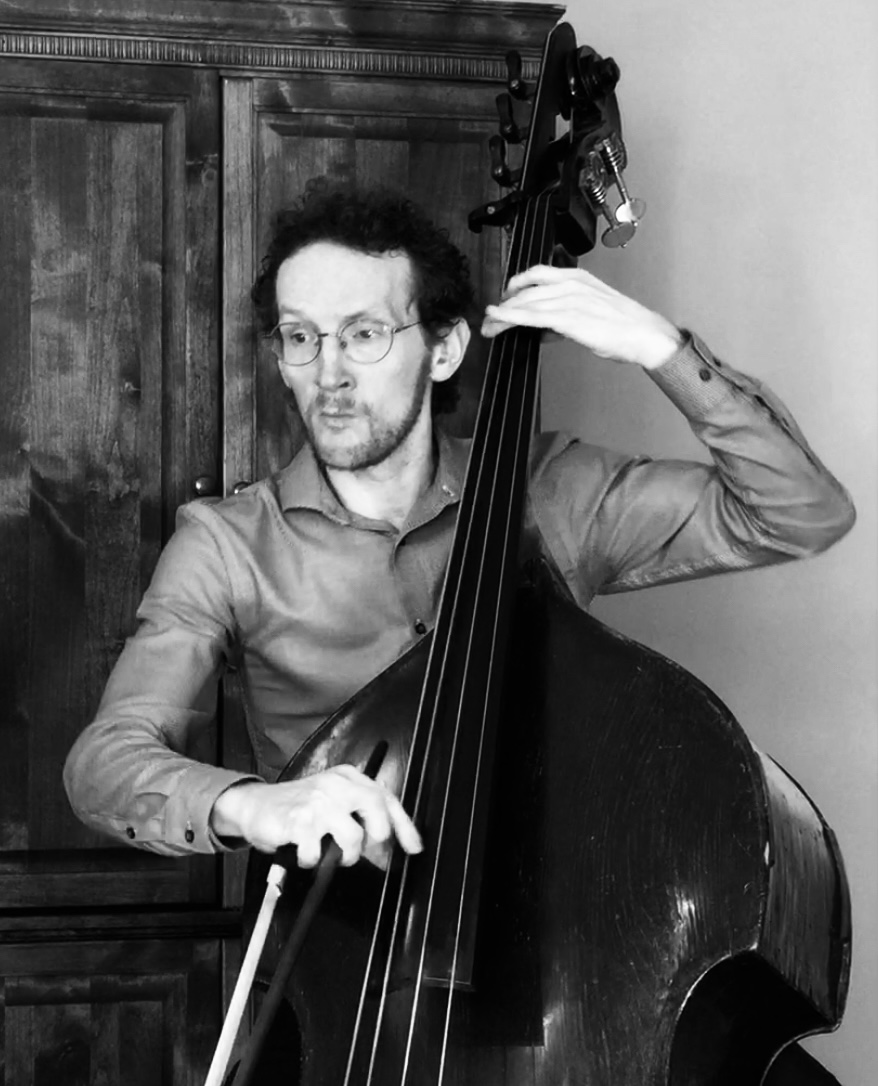 By Matt Heller, OCSM Secretary
OCSM has 21 orchestras, spanning over 6,000 kilometres. If you think of our nation as an enormous double bass bow, we were last at the frog (Halifax) in 2014, and at the tip (Victoria) in 2008. Recently we’ve spent some time in the lower third, where so many great strokes happen: Kitchener-Waterloo in 2024, Toronto in 2025. Our last visit to the middle, Winnipeg, was way back in 2006. Rosin up, because this summer, from August 11 to 14, we’ll be back.
OCSM Conferences always have a lot to look forward to, even if you’re not a weirdo who likes to compare Canada to a double bass bow. Meeting with colleagues from around the country, and all the intriguing, insightful, and unexpected conversations they can spark, is always my favourite part. We always set aside a significant amount of time for Conference Topics, our label for all those yet-to-be programmed discussions. Many of those topics will be introduced by your colleagues in Delegate Verbal Reports. Those sessions are closed to guests, because they can include sensitive topics.
We will hear from Orchestras Canada Executive Director Katherine Carleton, who recently announced she’ll be stepping down from that position later next year. Katherine’s reports are a highlight of OCSM Conferences for many of us. She delves deeply into topics that managers aren’t always eager to talk about: government funding and advocacy, audience strategies, recruiting for diversity, and much more. We will also hear reports from representatives of the Musicians Pension Fund of Canada, our fellow Player Conferences, AFM IEB President Tino Gagliardi, and Vice-President from Canada Allistair Elliott. OCSM Delegates are an inquisitive bunch, so many of these presenters will keep their prepared remarks short, knowing that the best stuff frequently comes out in the Q and A period.
OCSM Legal Counsel Michael Wright will be with us to talk about preparing for a negotiation, as well as uses and misuses of Non-Disclosure Agreements in our industry. That will set the table for a presentation from the Safe Music Initiative, a project led by OCSM members Jemma Jones and Gwen Klassen, which aims to make music workplaces and educational settings free of abuse, harassment, discrimination, and retaliation.
Symphonic Services Division Director Rochelle Skolnick and Field Negotiator Richard Sandals are a regular presence throughout OCSM Conferences. In addition to their regular reports and participation, Richard will lead a special training session for Orchestra Committee members and Local Officers on Tuesday morning, which he wrote about in the last Una Voce. We will also have a presentation on the 2025 Vancouver Symphony Orchestra Strike with VSO Delegate Rebecca Whitling, who was a lead negotiator.
Conference days can stretch long and dense with weighty topics. We always try to include a session on musicians’ health as well, which this year will be the Neuroscience of Practicing with Dr. Molly Gebrian. Dr. Gebrian, a violist and neuroscientist, offers ideas and research to optimize practice for students and professionals.
If you are able to join us in Winnipeg as a Delegate or guest, I look forward to seeing you! Guests can register using this link. If you can’t be there but are interested in connecting virtually, please send me a message, as we may be able to set up a Zoom link for certain sessions. A big part of the OCSM Delegate job is to report back to orchestras in the fall, so I hope you will ask them questions, find out more, and consider being an OCSM Delegate for a future summer. There are lots more parts of that big Canadian double bass bow to explore.
2026 Conference in Brief:
(All times CDT)
Tuesday, August 11
- Morning workshop for Orchestra Committee and Local Officers, led by Richard Sandals, SSD.
- Official Call to Order at 1pm
- Legal counsel presentation by Michael Wright, Negotiation and NDAs (1:30-3pm)
- Delegate Reports (in camera)
Wednesday, August 12
- Report from Katherine Carleton, Orchestras Canada; Conference topics with Katherine. (9-11am)
- Neuroscience of Practicing, with Dr. Molly Gebrian (11am-12n)
- Musicians Pension Fund of Canada (2-3pm)
- Musical Instrument Insurance with Western Financial (3-3:30pm)
- IEB and Player Conference reports (approx. 3:45-5:30pm)
- Evening social event -- details TBA
Thursday, August 13
- Vancouver Symphony Strike presentation with Becky Whitling (11am-12n)
- Safe Music Initiative with Jemma Jones and Gwen Klassen (4-5pm)
- Delegate Reports (in camera)
Friday, August 14
- OCSM Annual General Meeting (9am)
- Conference Topics
- Adjournment approx. 1pm
- Details
- Category: News
By Matt Heller, Una Voce editor
Thunder Bay Symphony Delegate Michelle Zapf-Belanger asked:
Do your contracts, or current practices, allow for a musician retiring at the end of the season to sit on an audition committee for their own replacement?
While Michelle’s question pointed specifically to retiring musicians, some Delegates discussed the potential for probationary or non-renewed musicians to take part in auditions. Adding to the confusion, in some places, a retiring musician is referred to as a “non-renewed musician”.
This might seem like a simple yes/no question, but it drew out some interesting nuance and discussion. And at least one orchestra has a “third way”, allowing retiring musicians to act as non-voting consultants to the audition committee – read on to find out where.
1. It can’t happen here.
COC, ESO, NBO, OSM, Victoria, VSO
From Victoria's CBA --
No musician may serve on any Auditions Committee if they are retiring or resigning from the orchestra or are subject to non-renewal proceedings pursuant to Article 10.
No musician may serve on any Auditions or Review Committee if they have a conflict of interest with respect to any candidate. Any dispute regarding a perceived conflict of interest will be referred to the Local.
- Bob Fraser, Victoria Symphony Delegate
From the Edmonton Musicians Association / Edmonton Symphony Society agreement:
Notwithstanding the provisions of 11.7 (which lists the audition panel members), no Player on notice of non-renewal may serve on the Audition Committee and any Player so excluded will be replaced by a Player in the next seated position in their section.
Notice of non-renewal means a Player who has given or received notice of non-renewal. Personal opinion: why would anyone even consider letting a musician who will not have any further involvement in the orchestra have a say in new members?
- Donald Plumb, ESO Alternate Delegate
A possible reason could be for a one person section like the harp or tuba, perhaps the outgoing member’s insight could be valuable, whether they can vote or not.
- Scott Robinson, OSQ Delegate
This is from the National Ballet agreement (in addition to a Conflict of Interest clause):
It is understood that a non-tenured musician, a musician who is resigning from the Orchestra, or a musician who has received a notice of dismissal may not serve on an Audition Committee. All musicians may serve on Audition or Review Committees except Third Bassoon.
- Maria Pelletier, NBO Delegate
2. Nothing prohibits it, though it still might get complicated.
OSQ, RSO, Winnipeg SO, SNS
SNS has no language addressing that situation. We probably should.
- Ken Nogami, SNS Alternate Delegate
In the OSQ agreement nothing prohibits this, a musician who has given notice retains their rights and responsibilities until the effective date of their retirement – though a musician who has received a notice of non-renewal may not participate on Audition Committees.
- Scott Robinson, OSQ Delegate
Here is what our CBA has in Winnipeg:
Vacancy on Committees - should a vacancy occur for any reason on any of the above committees, same shall be filled by a Musician appointed by the balance of the audition committee. In all cases there shall be at least one (1) Musician present on the committee representing the section in which the vacancy exists.
Notwithstanding the above, any Musician who is non-tenured, excepting the Concertmaster, or who has received a notice of disengagement (article 13.5) shall not sit on any committee except with the consent of the audition committee in question.
- Alex Whitehead, Winnipeg Symphony Delegate
Closest thing the Regina Symphony Orchestra CBA includes is:
No tenured musician may serve on the Audition Committee where that musician’s participation would compromise the integrity and impartiality of the process, or would create an appearance of partiality. Such conflicts of interest include, but are not limited to, situations where the tenured musician has or has had a dating, familial, domestic, or similar relationship with the candidate. Any person who has been identified as having a potential to violate the above criteria shall be brought to the attention of the Union Steward and Executive Director, who will decide in collaboration if the person is eligible for serving on the Audition Committee.
- Simon Fryer, RSO Delegate
3. Retiring musicians can be involved in some cases, but not as voting members.
CPO
Here’s our clause in Calgary:
In addition, a Musician whose position is being filled may not serve on the Audition Committee for his/her own replacement except for the case of a vacancy created by that Musician’s promotion within the Orchestra. Should the Audition Committee wish, the Musician vacating the position may be asked to attend the audition for their replacement as a non-voting consultant, with the permission of the Association and the Society.
- Michael Hope, CPO Delegate
- Details
- Category: News
Hometowns are listed for new hires, when available. This is not a complete list, as not all Delegates were able to compile information in time. Congratulations to all celebrating significant milestones this season!
Calgary Philharmonic
Recent retirees:
- Jim Scott, Principal Trombone, 45 years
- Stephanie Soltice-Johnson, Assistant Principal 2nd Violin, 40 years
New hires:
- Jay Uschold, Principal Tuba, Winnipeg, MB
- Andrew Warfield, Assistant Principal Horn 4, Nashville, TN
- Gonçalo Nova, Principal Trombone, Porto, Portugal
- Roberta Yee, Section First Violin, Calgary, AB
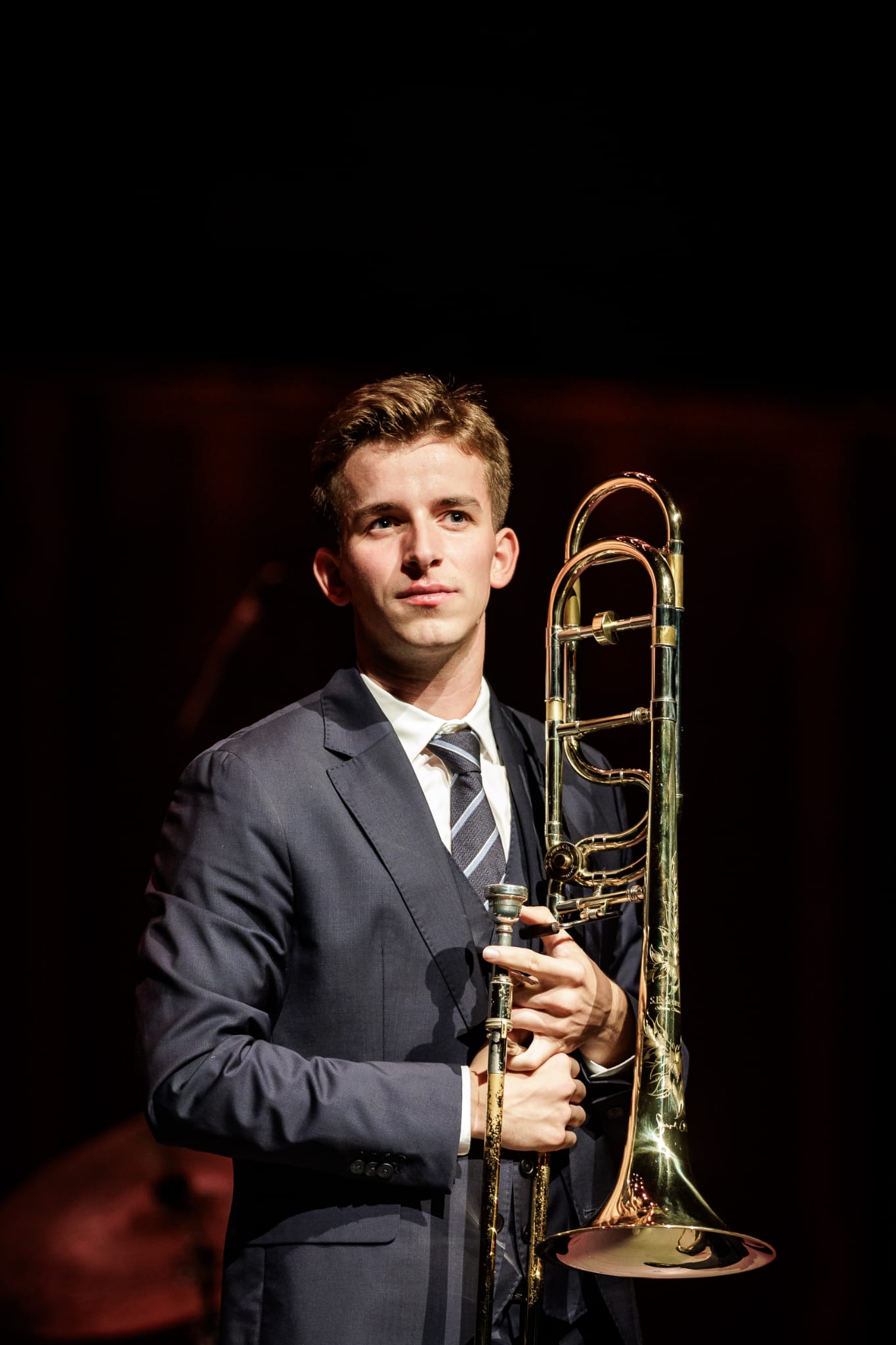 [photo: Gonçalo Nova, Principal Trombone, Calgary Phil]
Hamilton Philharmonic
New hires:
- Rebecca Morton, Cello
Milestones:
- Andrew Naagoe, Principal Clarinet, received tenure.
- Jesse Dietschi, Section Bass, received tenure.
- Jean Norman ladeluca, Timpani, 55 seasons.
London Symphonia
Recent retirees:
- Ron George, Principal Horn, 31 years
- Spencer Phillips, Principal Bassoon, 47 years
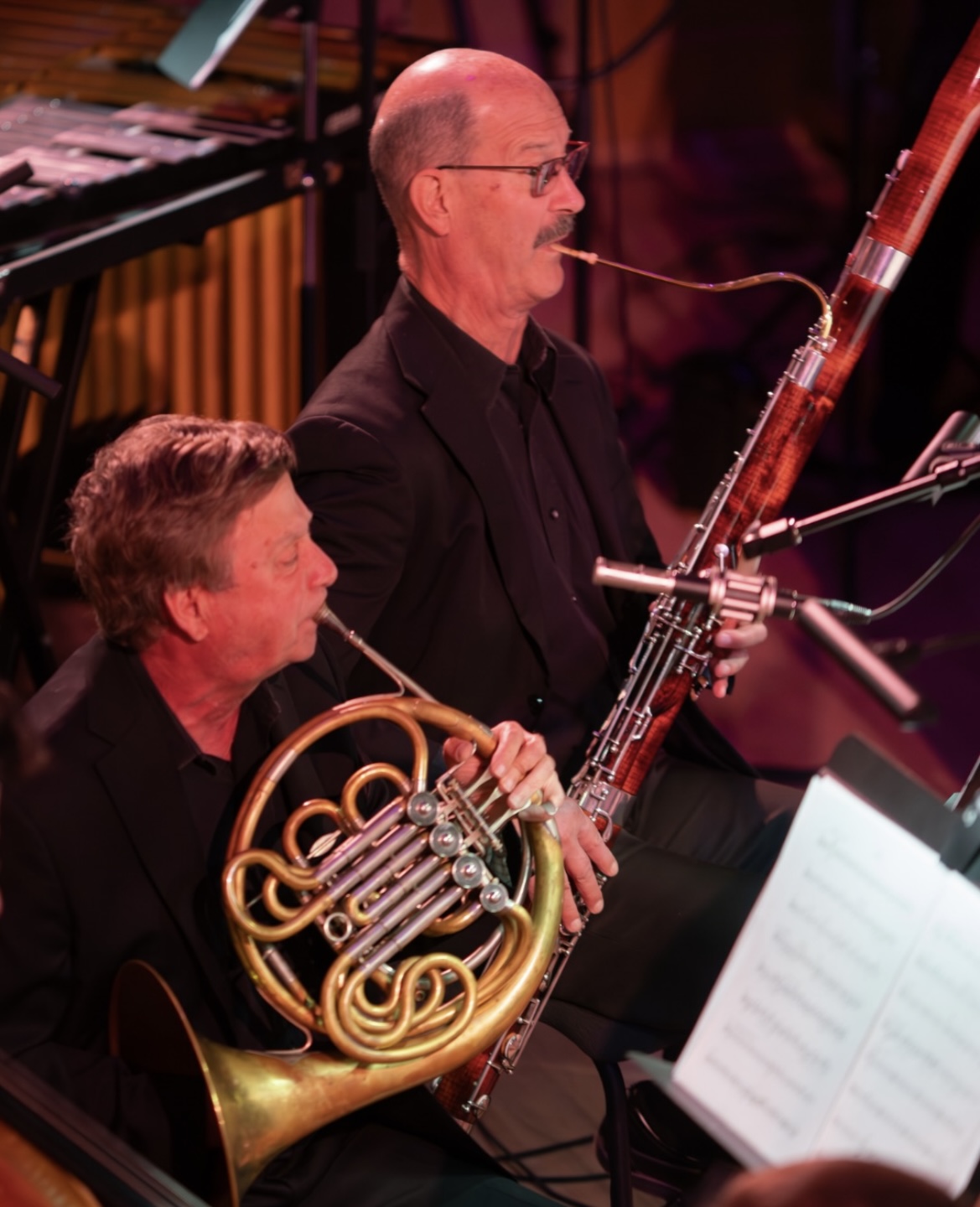
[photo: Ron George, Principal Horn and Spencer Phillips, Principal Bassoon, London Symphonia]
National Ballet Orchestra
Recent retirees:
- Gary Pattison, Principal, 2nd, and 4th Horn, 50 years
- Paul Widner, Cello, 35 years
- Jayne Madison, Violin, 36 years
New hires:
- Russell Iceberg, Assistant Principal 2nd Violin
- Joelle Crigger, Violin
- Aleh Remezau, Third Oboe
Niagara Symphony
Recent retirees:
- Steve Fralick, Principal Trombone
- Janice Fralick, Second Horn
Milestones:
- Peter Ryan, Section Cello, Received Tenure
Orchestre Symphonique de Montréal
Recent retirements:
- Monique Poitras, Second Violins, 42 years
- Pierre-Vincent Plante, English Horn, 41 years
- Jean-Marc Leclerc, Second Violins, 36 years
New hires:
- Chang-Ou Ladusa, First Violins, Montreal, QC
- Justine Lefebvre, Cello, Laval, QC
- Charles Pilon, Associate principal viola, Salaberry de Valleyfield, QC (was previously 2nd assistant)
- Emily Rekrut-Pressey, Second assistant viola, Winnipeg, MB (was previously section viola)
- San Rim, Cello, Toronto, ON
- Austin Wu, Second violins, Ottawa, ON
Regina Symphony
New hires:
- Patricia Vanuci, Per Service Cello, Winnipeg, MB
- William Huang, Per Service Percussion, Vancouver, BC
Milestones:
- Gordon Gerrard, Music Director, Completed 10 years in the role
Saskatoon Symphony
Recent Retirees:
- Oxana Ossiptchouk, Principal Violin 2, 21 years
New hires:
- Felicia Lévesque, Principal Flute, Saint-Stanislas-de-Kostka, QC
- Scott Harrison, Principal Trumpet, Germany
- Nathaniel Meers, Principal Percussion, Ottawa
- Katrina Dunkle, 3rd Horn, Edmonton
- Emily Ann Dueck, Violin 1, Winnipeg
- Sophia Mycyk, Violin 1, Saskatoon
- Julia Grant, Violin 2
- Michael TIrkaja, Violin 2
Milestones:
- Erin Brophey, Principal Oboe, Returning after 1 year's leave
- Drusilla Waltz, Assistant Concertmaster, Returning after filling Principal second violin
- Wagner Barbosa, Violin 2, Returning after filling assistant concertmaster
Symphony Nova Scotia
New hires:
- Katie Stevens, 1st Violin
- Jacob Macdonald, Assistant Principal Cello
- Thaddeus Morden, Cello, Ottawa, ON
- John Cleere, Principal Bass
- Sam Hughes, Principal Trumpet
- Nick Richard, Principal Bassoon
Milestones:
- Carolyn Farnand, Principal Viola, Resigned to join Winnipeg Symphony
Thunder Bay Symphony
Recent retiree:
- Colleen Kennedy, Principal Oboe, 45 years
Toronto Symphony
Recent retiree:
- Camille Watts, Flute and Piccolo, 35 years
Victoria Symphony
Recent retiree:
- Christi Meyers, Assistant Concertmaster, 24 years
New hires:
- Jonas Koh, Principal Timpani, California
- Holly Venkitaswaran, Second Flute/Piccolo, Wisconsin
- Tyson Doknjas, Section Violin, Campbell River, BC
- Vinci Chen, Section Cello (one-year), Vancouver, BC
- Jay Uschold, Principal Tuba (one-year), Winnipeg, MB
Winnipeg Symphony
New hires:
- Andrew Busch, Principal Percussion
- Hannah Craig, Assistant Principal Cello
- Tsai-Hsuan (Sage) Chen, Second Violin
- Carolyn Farnand, Acting Assistant Principal Viola
- Details
- Category: News
Dear OCSM Members - this is to serve as notice that the Annual General Meeting of the Organization of Canadian Symphony Musicians will be held on August 14, 2026 at the Fort Garry Hotel in Winnipeg, MB. Each of your orchestras will be represented by a Delegate who will vote on behalf of your orchestra on all business before this meeting, including nominations and election of members of the Executive Committee. You are receiving this notice as you are all Professional Members of one of our 21 orchestras.
At this AGM, nominations and elections will be held for the following positions on the OCSM Executive Committee (all for two-year terms beginning on August 14, 2026 until the AGM in 2028):
- First Vice-President
- Secretary
- Treasurer
In accordance with OCSM Bylaws, any Member Orchestra Delegate may nominate current Professional Member(s) for election to the Executive Committee. If you are interested in serving on the Executive Committee, there are two ways you can run for office:
- make yourself known to your Member Orchestra Delegate and they can nominate you at the AGM, or
- make yourself known to the OCSM Nominations Committee by contacting me at this address
This email address is being protected from spambots. You need JavaScript enabled to view it.
We have a Nominations Committee that oversees this process, consisting of two Member Orchestra Delegates (who are not running for office) and myself. The Nominations Committee is empowered to nominate you at the AGM if you choose this route.
The duties of each of these positions is outlined in OCSM's Bylaws (listed at the end of this e-mail), however from time to time various duties have been outsourced to other parties or shared among other Executive Committee Members. The Executive Committee meets online at least once per month. If you have any questions about the requirements of each position, please contact me at the same above address.
Yours Sincerely,
Robert Fraser
OCSM President, on behalf of the OCSM Nominations Committee
David Goldblatt, Delegate for National Arts Centre Orchestra
Michael Hope, Delegate for Calgary Philharmonic Orchestra
- Details
- Category: News
By Richard Sandals
Nobody is born understanding how to serve on an orchestra committee. Some people enter the profession with some of the raw materials, and some people quickly pick up a lot of the nuances once they get their first job. Still, nobody starts out knowing everything they will need to know — but everybody can learn.
The problem, of course, is that very often, the only opportunity to learn is by doing, and that can be an intimidating prospect. This is why the Symphonic Services Division offers training for orchestra committees and Locals… sort of. This training has been available for some time, but at least in recent memory, it has only been provided in the US. This is about to change.
SSD Director Rochelle Skolnick and I are working on creating a version of the training module that is tailored to Canadian orchestras. We’ll be running a kind of “beta test” of that training module at the OCSM Conference this summer in Winnipeg. Once we’ve incorporated the feedback we get from delegates, committee members, and Local officers, this training module will be available to Locals and orchestra committees across Canada.
One thing we particularly want to emphasize is that this training is intended to be delivered to Locals and orchestra committees together. We can also include other “committee-adjacent” participants, like OCSM delegates and negotiating committees. Committees and Locals have to work together to represent members, so it’s critical that they share a common understanding of what needs to be done, who needs to do it, and why.
We also want to make sure that this training will be useful for new members, experienced veterans, and everyone in between. None of us are too old to learn some new tricks! We will make sure that the training is tailored to the participants and to the particular challenges they’re facing.
More than simply imparting information, we hope that this training can be a chance for meaningful dialogue among all participants. A lot of the time, we don’t think very much about the relationship among the orchestra committee, the Local, and SSD — it just kind of “is,” often because it’s always worked (or not worked!) a particular way, or because it can be awkward to ask somebody to do more, or to do less, or to do things differently. Rather than getting locked into a particular way of doing things, I think we should all be open to finding ways to put everybody in a situation where they can make the best contribution with the best chance of success.
We’ll be reaching out to committees and Locals about this training program once it’s ready to implement, but if you’re interested, please reach out to me at
- Details
- Category: News
By Matt Heller, OCSM Secretary
“Could I nominate you for (fill in the blank) Committee? Because you’d be great.”
I’ve probably had that conversation with dozens of my Calgary Phil colleagues. Some said yes. Most were somewhere between “I’ll think about it” and “You’ve got to be kidding me!”
We’re not alone in this challenge. At last summer’s OCSM Conference, one of our most animated discussions was on this very topic: Recruiting new committee members. Of course, the specific circumstances that make it challenging can vary quite a bit. Some orchestras are largely made up of part-timers, and/or people without much discretionary time. (Shout out to parents!) Some of these roles may seem to demand specialized knowledge, conflict resolution skills, or a deep institutional memory, which not all of us have. Some might worry that committee work could get them in trouble. And underlying all of this is the question: is it worth my time?
Here, in no particular order, are some ideas and suggestions Delegates offered:
- Pitch it 1-on-1. All members need to be informed of positions up for election. Still, identifying likely candidates and getting them to accept a nomination can require a personal touch, as well as the patience to follow up and address concerns.
- Purpose matters. Some recalled asking what a committee did, only to be told, “You go to meetings”. Needless to say, few were inspired. Focus on deeper purposes: representing our colleagues, improving the artistic product, solving difficult problems.
- Start early. New orchestra members are often highly dedicated and motivated, with fresh perspectives and energy to solve sticky problems. Delegates praised this incoming generation for their courage and interest in collective action.
- Elections can be a good thing. Many of our positions get filled “by acclamation”, rather than contested elections. That can be fine, but some noted the value of a vote of confidence from colleagues. Some orchestras require Orchestra Committee members receive a minimum number of votes to qualify, or call for a show of hands even when a nominee runs unopposed.
- Guidance helps. We all need help learning a new role. Delegates suggested more experienced committee members write things down, creating easy explainers and checklists to help hand off responsibilities smoothly. Having a supportive Local and past committee members willing to provide advice in times of need can also be crucial.
- Different works. Some pointed out that flexibility is necessary; new people will approach the roles with their own styles and strengths. Those of us who have been doing this a long time should embrace seeing it done a little differently.
Whether you’re thinking about serving on a committee yourself, or twisting colleagues’ arms as I was, I hope this gives some useful ideas. And for those of you who are serving on committees, thank you for stepping up, and for all you do! Your colleagues thank you too, even if we don’t say it enough.
- Ask an OCSM Delegate: Sold-out shows
- Musicians now have Fever’s attention: an interview with Zack Reaves
- New CITES permit requirements for Pernambuco wood
- Editor's note: On timely replies
- New Agreements in Victoria, Winnipeg, Calgary, National Ballet, Regina, Quebec, and Vancouver
- Ask an OCSM Delegate: What's your tuning pitch?
- Screens vs. the Arts
- From the President: Happy 50th to OCSM!
- 2025 Conference Preview
- Calgary Philharmonic: Notes from the Stage podcast